What is duende in flamenco? And where to feel it in Madrid
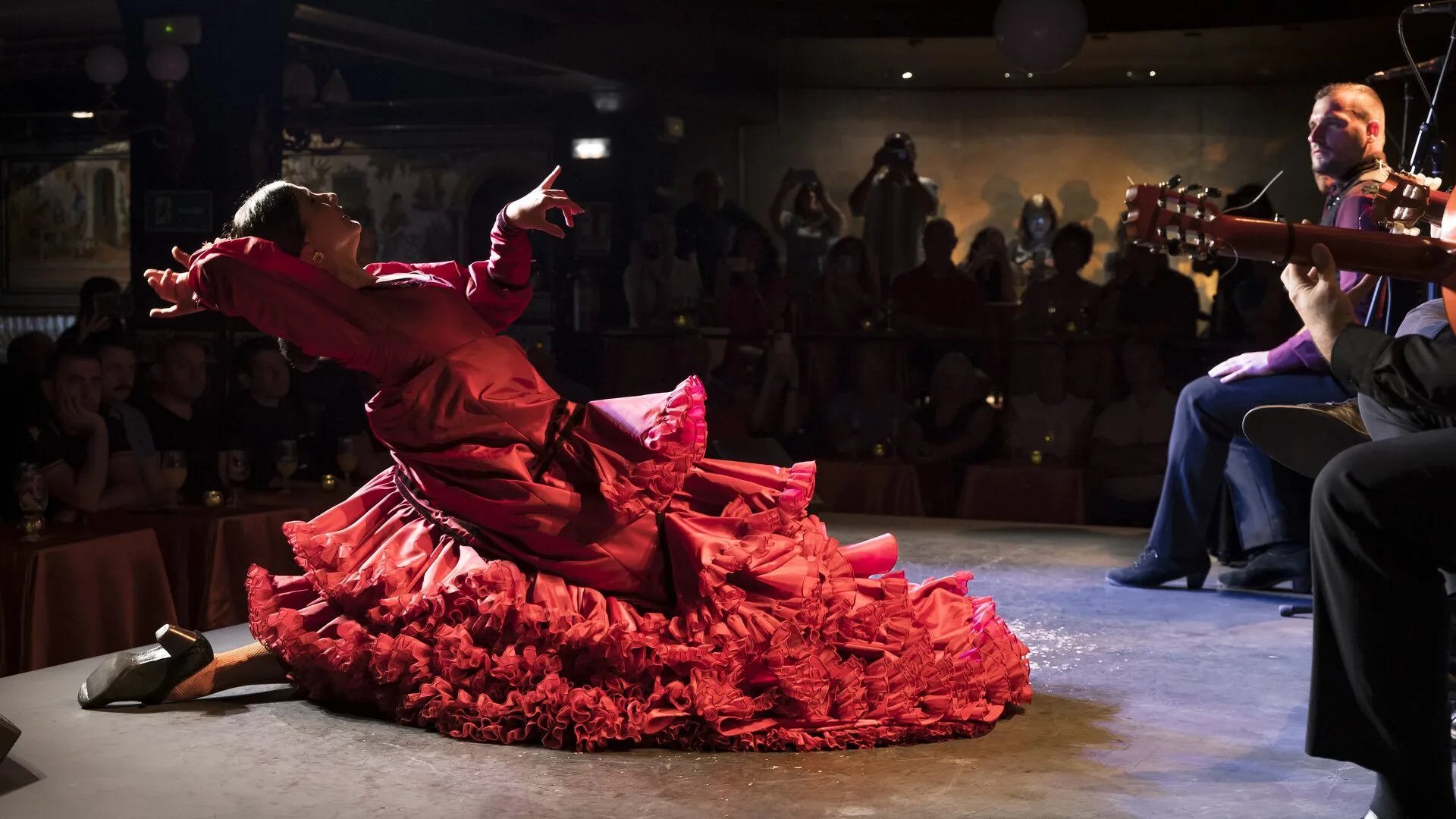
There is a moment in a great flamenco performance when something shifts. The room goes quiet in a different way. The singer's voice breaks, or the dancer freezes mid-movement, or the guitarist finds a phrase so perfectly right that time seems to stop. The audience feels it before they understand it. That is duende.
Duende is the most important word in flamenco — and the hardest to explain. This guide explores what it means, where it comes from, and most importantly, how to find it in Madrid.
Duende is the spirit of authentic emotional expression in flamenco — a raw, uncontrollable force that emerges when an artist performs with total honesty. It cannot be faked, rehearsed, or guaranteed. But the right venue dramatically increases your chances of experiencing it.
The origin of duende
The word duende in everyday Spanish refers to a goblin or sprite — a mischievous supernatural being. But in the context of flamenco, it was elevated to something far more profound by the Spanish poet Federico García Lorca in his famous 1933 lecture, Juego y teoría del duende (Play and Theory of the Duende).
For Lorca, duende was not a technique or a style. It was a dark, irrational force — connected to death, to the earth, to human suffering — that emerged through the body of the artist in moments of true creative abandon. He distinguished it from the angel (technical perfection) and the muse (intellectual inspiration), describing it as something that "has to be roused from the uttermost recesses of the blood."
"The duende... is a power, not a work. It is a struggle, not a thought. I have heard an old maestro of the guitar say, 'The duende is not in the throat; the duende climbs up inside you, from the soles of the feet.'"
— Federico García Lorca, 1933In practical terms, duende is what separates a technically flawless performance from a transcendent one. It is the difference between watching someone dance and being moved to tears by a dancer. It is why flamenco, at its best, feels like something more than entertainment.
What does duende feel like?
Duende is easier to describe by its effects than by its cause. Audiences who have experienced it often describe:
- A sudden silence in the room — as if everyone has collectively held their breath
- Goosebumps or a physical shiver — what the Spanish call el escalofrío
- A feeling of witnessing something private and raw — as if the performer has forgotten the audience exists
- Spontaneous shouts of ¡Olé! or ¡Así se canta! from other audience members, especially from the artists themselves
- A moment of absolute stillness followed by an explosion of emotion — from both the performer and the room
It does not last. It arrives, transforms the room, and disappears. Some performances have it for a few seconds; some have it repeatedly; many never have it at all.
Can duende be performed on demand?
No — and this is precisely what makes it so valuable. Duende is not a technique. You cannot learn it, rehearse it, or schedule it. The greatest flamenco artists speak of it as something that happens to them, not something they produce.
What artists can do is create the conditions for duende to emerge. This requires total emotional honesty, deep technical mastery (so that technique disappears and only emotion remains), and a connection with the other performers and the audience that transforms the space into something sacred.
This is why intimacy matters so much in flamenco. In a large theatre, duende is rare. In a small tablao where the artists are performing just metres from an engaged audience, the conditions are right. The energy between performer and audience becomes a circuit — and when that circuit closes, duende can happen.
Where to experience duende in Madrid
Not every flamenco show in Madrid offers genuine conditions for duende. Large-scale tourist productions, however professionally executed, rarely achieve it. The shows most likely to produce duende share certain qualities:
- Small, intimate venues — The physical proximity between performer and audience is essential
- Resident professional companies — Artists who have performed together for years develop the musical communication that enables duende
- Authentic repertoire — The deeper palos of flamenco — soleá, seguiriyas, martinete — are the traditional vehicles for duende. Shows built around lighter forms are less likely to touch the depths
- An engaged audience — Duende feeds on collective attention. A room full of people genuinely present — not on their phones, not distracted — creates the right conditions
The tablaos of the Barrio de las Letras — the historic flamenco quarter around Calle Echegaray and Plaza de Santa Ana — have been producing the conditions for duende for over a century. These are the venues most likely to give you the experience you are looking for.
Tips for maximising your chances of experiencing duende
- Choose a small tablao — Capacity of under 150 is ideal. The more intimate, the better.
- Book the later show — The 21:00 or 22:30 show tends to have a more engaged, less tourist-heavy audience. Artists are warmed up and the energy in the room is different.
- Put your phone away — Duende cannot coexist with distraction. Be fully present.
- Learn to listen — Pay attention to the interaction between the singer and guitarist, to the palmas (handclapping), to the silences between phrases. Duende often emerges in the spaces between the notes.
- Let go of expectations — Duende arrives when you stop looking for it. Arrive open, and let the performance take you wherever it goes.
"You will know duende when you feel it. Not because someone told you about it, but because something in you recognises it — something older than language."
— The Flamenconearme.com teamFrequently asked questions about duende
About the author
Miguel Blanco was born in Cadiz, the birthplace of flamenco, and fell in love with the art as a child. Today he lives in Madrid, where he has spent years following the city's tablao scene closely — which is how Flamenconearme.com came to be: the guide he wishes he'd had on day one. Read more