Flamenco in Seville vs Madrid — which city for the best show?
It is one of the most common questions we get: should I see flamenco in Seville or Madrid? Both cities have deep and genuine connections to flamenco. Both have excellent tablaos. And depending on the kind of trip you are planning, either one could be the right answer.
This guide gives you an honest comparison — based on 30 years of working with flamenco in Spain — so you can make the right choice for your trip.
Seville and flamenco — the birthplace
Flamenco was born in Andalusia, and Seville is at the heart of that origin story. The Triana neighbourhood, across the Guadalquivir from the historic centre, has been a flamenco community for centuries. The art form that we recognise today — the palos, the cante jondo, the relationship between singer, guitarist and dancer — was forged in the bars and brotherhoods of Triana and the surrounding areas.
This history is real and it matters. When you see flamenco in Seville, you are in the place where it came from. The city has a living flamenco culture that goes beyond the tablaos — there are peñas flamencas (private flamenco clubs), flamenco festivals throughout the year, and an art school tradition that produces many of Spain's finest artists.
For a visitor with time and curiosity, Seville offers a depth of flamenco experience that is hard to replicate anywhere else.
Madrid and flamenco — where the best artists perform
Here is what many visitors do not know: Madrid has been the professional capital of flamenco for over a century. The reason is simple — money and opportunity. The best flamenco artists from across Andalusia have always come to Madrid to build their careers, perform for the most demanding audiences and earn the fees that only a capital city can offer.
The Barrio de las Letras — the neighbourhood around Calle Echegaray and Plaza de Santa Ana — became Madrid's flamenco quarter in the early 20th century, and it remains so today. The concentration of serious tablaos here is unmatched anywhere in Spain.
Seville is where flamenco was born. Madrid is where the best flamenco artists in the world perform every night. Both are true. Neither cancels the other out.
The practical differences
Quality of the shows
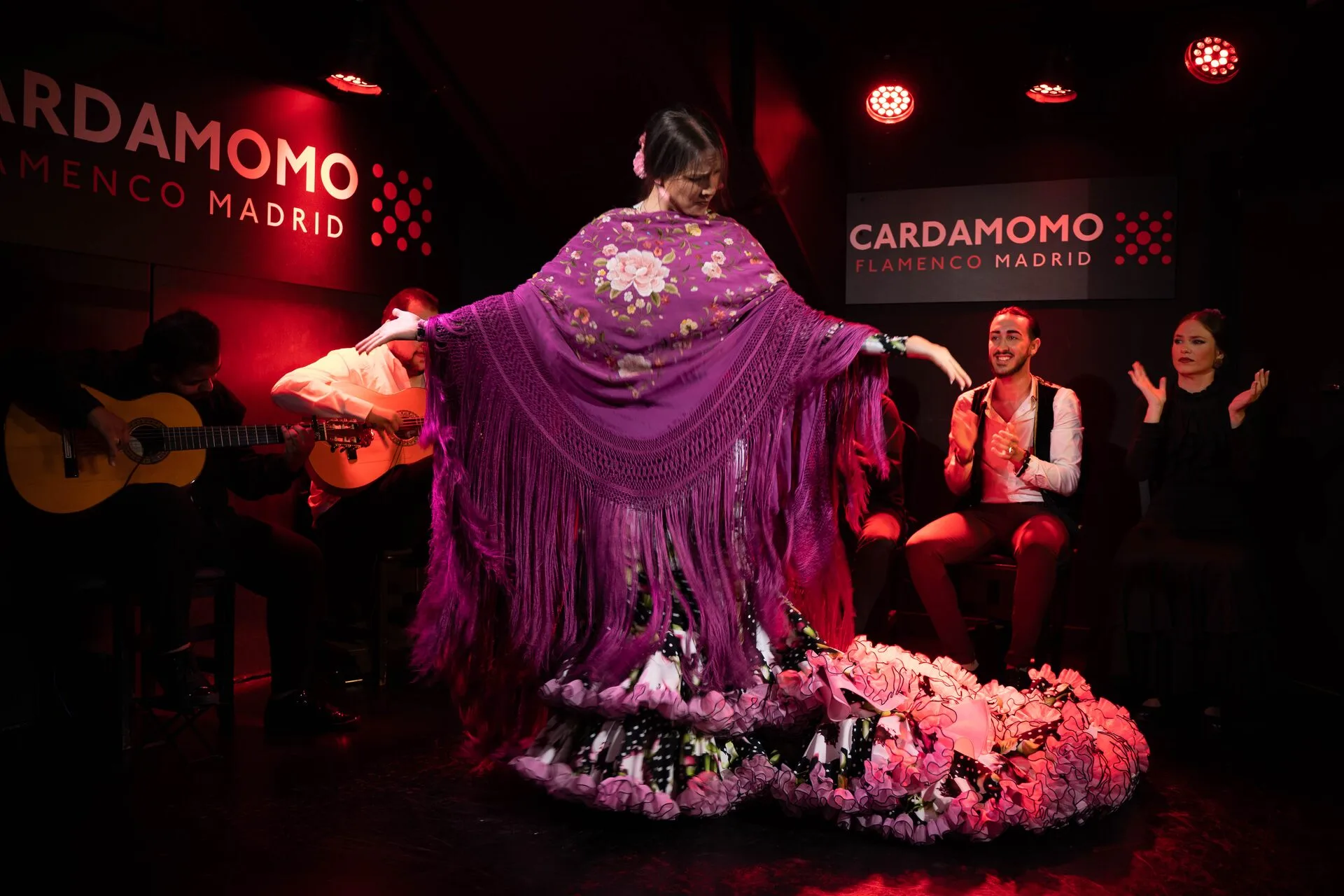
Madrid's tablaos consistently attract the highest-calibre artists because they can afford to. The resident companies at venues like Cardamomo and Tablao Flamenco 1911 are professional ensembles of 12 or more artists — singers, guitarists, dancers, percussionists — performing at the top of their craft every night. Seville has excellent tablaos too, but the concentration of consistently world-class shows is higher in Madrid.
The tablao experience
The format of a traditional tablao — intimate venue, close to the stage, no dinner, 60 minutes of pure flamenco — is equally available in both cities. If this is what you are looking for, either city will deliver it. The difference is in the quality and consistency of what is on stage.
Context and atmosphere
Seville adds something that Madrid cannot: the feeling of being in the place where flamenco came from. Walking through Triana before a show, knowing that the same streets produced the art form you are about to see, adds a layer of meaning that some visitors find essential.
Madrid offers a different context — cosmopolitan, urban, the city that the best artists chose as their professional home. There is prestige in that too.
Availability and convenience
Madrid has more shows, more venues and more flexibility. Daily shows at 18:00, 19:30, 21:00 and 22:30 — you can fit flamenco around almost any itinerary. Seville's best tablaos also offer multiple shows but the choice is more limited.
Seville vs Madrid — the verdict
If you are visiting both cities — and Spain rewards visitors who do — see flamenco in both. The experience in each city will tell you something different about the art form.
If you can only choose one, and your priority is the quality of the performance itself, Madrid is the answer. If your priority is historical and cultural immersion, Seville.
Where to see flamenco in Madrid
If Madrid is your choice — or part of your itinerary — two tablaos in the Barrio de las Letras stand above everything else the city offers.
Cardamomo Flamenco — Calle Echegaray 15
Founded 1994. Recommended by The New York Times. Cultural Heritage of the City of Madrid. 100 seats, professional resident company, daily shows from 18:00. From €34.
Tablao Flamenco 1911 — Plaza de Santa Ana 15
Founded 1911 — the oldest tablao in the world. 170 seats in an interior that recreates the Alhambra. Heritage-protected facade. Over a century of authentic flamenco in Madrid city centre. From €40.
Frequently asked questions about Seville vs Madrid
About the author
Miguel Blanco was born in Cadiz, the birthplace of flamenco, and fell in love with the art as a child. Today he lives in Madrid, where he has spent years following the city's tablao scene closely — which is how Flamenconearme.com came to be: the guide he wishes he'd had on day one. Read more